Source car door hinge for Transportation, Decorations, Machine Parts
Explore 30 listings for car door hinge options including hot rolled, forged, and galvanized variants. Buyers can compare specifications like thickness, surface treatment, and customization availability from suppliers in China.
Key considerations
Products List


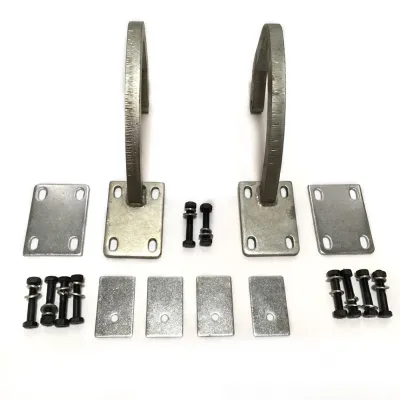
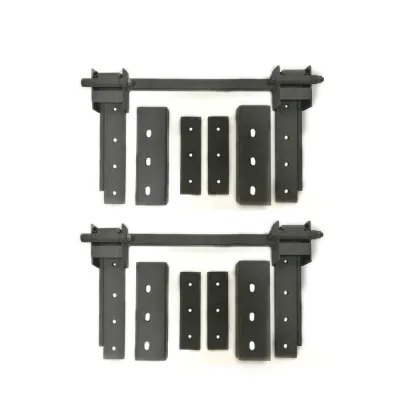


$1.00 - $20.00
Moq: 1000


Comprehensive Sourcing Guide
Strategic Sourcing Guide for Automotive Door Hinge Systems
Procuring automotive door hinge systems requires a rigorous approach that balances mechanical precision with supply chain reliability. The market for these components is characterized by a wide variance in specifications, ranging from standard OE-grade replacements to heavy-duty gate hinge kits and specialized suicide hidden hinge systems. Buyers must navigate a landscape where customization is available, yet material properties and surface treatments vary significantly between suppliers. This guide outlines the critical factors for sourcing car door hinges, focusing on technical attributes, compliance verification, and cost management based on observed market data.
Technical Specifications and Material Composition
The foundational aspect of sourcing car door hinges lies in understanding the specific technical requirements of the application. The product data indicates a diverse range of models, including OE-grade replacements, hinge systems designed for high-corrosion resistance, and heavy-duty kits. A critical observation is the material composition; while some listings specify "Non-alloy" characteristics, others explicitly state "Metal" as the base material, and "High-strength Steel Plate" is noted for specialized uses. Buyers must verify the exact alloy composition, as the distinction between non-alloy and high-strength variants directly impacts load-bearing capacity and fatigue life.
Surface treatment is another paramount specification. The observed market data lists multiple finish types, including "Galvanized," "Yellow Zinc Plated," and "Chrome Plated." The choice of finish is not merely aesthetic but functional, dictating the component's resistance to environmental degradation. For instance, a "Natural Color" finish may be suitable for internal applications, whereas exterior components typically require zinc or chrome plating to prevent rust. The thickness of the hinge is also a variable specification, with some products listed at 3mm, while others offer standard sizes ranging from 4 inches to 8 inches.
Furthermore, the manufacturing technique influences the final product's integrity. The data highlights two primary production methods: "Hot Rolled" and "Forged." Forged hinges generally offer superior grain structure and strength, making them preferable for high-stress applications like heavy-duty gate kits or suicide hinges. Hot-rolled components may be suitable for lighter duty or decorative applications. Buyers should request mill test reports or specific forging certifications to validate the production method claimed by the supplier.
| Specification Category | Observed Variations | Procurement Verification Point |
|---|---|---|
| Material Type | Non-alloy, Metal, High-strength Steel Plate | Verify alloy grade and tensile strength requirements. |
| Surface Finish | Galvanized, Yellow Zinc Plated, Chrome Plated, Natural Color | Confirm plating thickness and salt-spray test results. |
| Manufacturing Process | Hot Rolled, Forged | Request process validation for load-bearing claims. |
| Dimensions | 3mm thickness, 4"-8" standard sizes, Custom | Validate tolerance levels against OEM drawings. |
| Packaging | Iron Wire, Steel Wire, Carton, Wooden Case, Box | Ensure packaging prevents damage during transit. |
Compliance, Certification, and Standard Adherence
Navigating the regulatory landscape is essential for automotive components. The observed product listings reference a broad spectrum of international standards, including AISI, ASTM, BS, DIN, GB, and JIS. This indicates that compliant suppliers are capable of meeting diverse regional requirements. However, the presence of these standards in a listing does not guarantee that every specific SKU adheres to them; buyers must explicitly confirm which standard applies to their specific order.
Certification is a critical filter for supplier selection. The data confirms that ISO, CE, and CCC certifications are available in the market. While CE is a common requirement for European markets, the CCC mark is specific to China. Buyers must ensure that the supplier holds valid, current certificates that cover the specific product line being purchased. Relying on general certification claims without verifying the scope of the certificate can lead to compliance failures during customs clearance or vehicle homologation.
Additionally, the product standards for dimensions are listed as "5.8m or 11.8m per piece" in some contexts, while others specify "Standard Size or according to the customer request." This discrepancy highlights the need for precise communication. For automotive applications, where fitment is critical, "custom" standards must be backed by detailed engineering drawings. Buyers should not assume that a "standard" listing will fit a specific vehicle model without cross-referencing the part number against the vehicle's OEM specifications.
Cost Drivers and Pricing Dynamics
The pricing for car door hinges is highly variable, with observed ranges spanning from $0.20 to $1,500.00 USD. This vast disparity is driven by several factors, including the complexity of the hinge design, the material quality, and the volume of the order. The Minimum Order Quantity (MOQ) also plays a significant role, with observed ranges from 1 to 50,000 units. High-volume buyers can leverage economies of scale to reduce unit costs, while those seeking samples or low-volume replacements may face higher per-unit prices.
The "Lowest" price attribute is frequently mentioned in listings, but this should be treated with caution. In the context of automotive safety components, the lowest price often correlates with lower material grades or reduced quality control measures. Buyers should analyze the cost structure by breaking down the price into material, processing, and logistics. For example, a hinge with a "Yellow Zinc Plated" finish may cost more than a "Natural Color" one due to the additional chemical processing required. Similarly, "Forged" hinges will inherently cost more than "Hot Rolled" ones due to the energy and tooling investment involved.
Payment terms are another cost driver. The data indicates options such as "Tt/LC" (Telegraphic Transfer / Letter of Credit) and "Negotiable" terms. For international procurement, using a Letter of Credit can mitigate financial risk but may add administrative costs. Buyers should negotiate terms that align with their cash flow while ensuring the supplier has sufficient liquidity to maintain production schedules.
Typical Applications and Functional Requirements
Car door hinges serve diverse applications beyond standard passenger vehicles. The product data identifies uses in "Decorations," "Transportation," and "Machine Parts." Specific models are designed for "Heavy duty gate hinge kits" and "OEM auto parts suicide hidden hinge kits." These specialized applications demand different performance characteristics. For instance, a suicide hidden hinge requires precise engineering to ensure the door stays open at various angles without sagging, while a heavy-duty gate hinge must withstand repeated high-load cycles.
The "Special Use" attributes listed include "High-strength Steel Plate" and "Wear Resistant Steel." These materials are essential for applications where the hinge is subjected to frequent opening and closing or harsh environmental conditions. In transportation applications, the hinge must maintain structural integrity under vibration and thermal expansion. Buyers should map the intended application to the specific material and finish specifications. A hinge suitable for a decorative gate may fail prematurely if used on a high-frequency commercial vehicle door.
Supplier Evaluation and Origin Verification
Geographic origin is a key factor in supplier evaluation. The data consistently points to "China" as the origin, with specific mentions of "Wehzhou" as a city of production. This concentration suggests a robust supply chain ecosystem in the region, but it also necessitates thorough due diligence. Buyers should verify the supplier's physical location and manufacturing capabilities. The presence of a specific city name is a positive indicator of a localized supply chain, but it does not guarantee the quality of the specific factory.
The "Customization" attribute is widely available, allowing suppliers to tailor products to specific OEM requirements. However, the ability to customize does not equate to the ability to maintain quality at scale. Buyers should evaluate the supplier's capacity to handle "OEM" requests, as the data confirms that OEM acceptance is a common feature. This includes the ability to produce parts with specific part numbers like "MXAP017" or "CDH 6213."
When evaluating suppliers, look for evidence of a robust quality management system. The "High Level" and "High" quality attributes are subjective claims. Buyers should request audit reports, customer references, and evidence of their production line capabilities. The "Disassembly" attribute suggests that some hinges are designed for easy maintenance or replacement, which is a valuable feature for fleet managers.
Quality Control and Long-Term Procurement
Quality control is non-negotiable for automotive components. The "High-strength" and "Wear Resistant" claims must be validated through testing. Buyers should insist on test results for tensile strength, corrosion resistance, and fatigue life. The "Surface Treatment" being "Yes" in the data implies that treatment is a standard step, but the quality of this treatment varies. A "Galvanized" finish must meet specific thickness standards to be effective.
Long-term procurement considerations include lead time and delivery reliability. The data shows a standard lead time of "30 Days," but also mentions "as Fast as Possible" for certain orders. This inconsistency suggests that lead times are flexible and dependent on order volume and customization. For critical supply chain needs, buyers should secure a fixed lead time in the contract rather than relying on "as fast as possible" promises.
Packaging is also a quality control factor. The data lists various packaging methods, including "Neatly Packed with Iron Wire," "Steel Wire," "Carton," "Wooden Case," and "Box." For heavy or precision components, a "Wooden Case" may be necessary to prevent damage. Buyers should specify packaging requirements in the purchase order to ensure the hinges arrive in pristine condition.
Finally, the "Payment" terms and "OEM" acceptance should be formalized in a long-term agreement. The "Negotiable" nature of payment terms allows for flexibility, but it requires clear communication to avoid disputes. A successful procurement strategy involves building a relationship with a supplier who can consistently deliver high-quality, compliant, and customized hinge systems that meet the rigorous demands of the automotive industry. By focusing on these verified attributes and avoiding unverified claims, buyers can mitigate risk and ensure a steady supply of critical components.
FAQs
What customization options are available for car door hinges?
Customization is available for car door hinges to meet specific OEM requirements. Buyers can request custom dimensions, surface finishes like galvanized or chrome plated, and specialized materials such as high-strength steel plates or wear-resistant variants.
Which certifications do car door hinge suppliers typically hold?
Suppliers typically hold ISO, CE, and CCC certifications for their car door hinge products. These certifications ensure compliance with international standards like AISI, ASTM, BS, DIN, GB, and JIS, though buyers must verify the specific scope for their order.
How long is the lead time for ordering car door hinges?
The standard lead time for ordering car door hinges is 30 days. However, some suppliers may offer faster delivery times depending on order volume and customization needs, so this should be confirmed before placing an order.
What materials are used to manufacture car door hinges?
Car door hinges are manufactured using metal, including non-alloy and high-strength steel plates. Some specialized applications utilize wear-resistant steel to ensure durability under heavy use or harsh environmental conditions.
Can car door hinges be sourced with specific surface treatments?
Yes, car door hinges can be sourced with various surface treatments including galvanized, yellow zinc plated, and chrome plated finishes. Natural color finishes are also available for specific applications where plating is not required.
What is the typical MOQ for purchasing car door hinges?
The minimum order quantity for car door hinges ranges from 1 to 50,000 units depending on the supplier and product type. High-volume buyers can often negotiate better pricing, while low-volume buyers may face higher per-unit costs.
Where are car door hinges typically manufactured?
Car door hinges are typically manufactured in China, with specific production hubs located in cities like Wehzhou. Buyers should verify the exact factory location to ensure supply chain reliability and quality control.